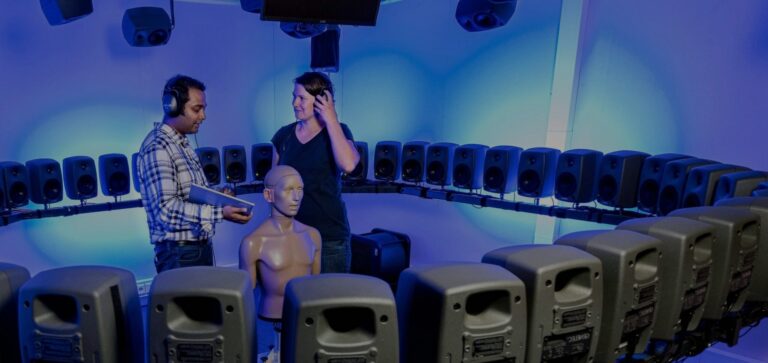
The evidence behind Sound Preference
Sound Preference is grounded in research showing that people have different preferences, and explains why these differences matter. Understanding Sound Preference, and exploring it with the individual client, adds a new dimension to hearing care, enabling more personalized and effective outcomes.
~40%
of listeners show a strong and consistent preference for one of two distinct sound processing designs
85%
of hearing care professionals agree that no single hearing aid technology is best for everyone
Sound Preference as a measurable dimension in hearing aid fitting
Explore our whitepaper and get the full scientific foundation behind Sound Preference, including:
- Methods and results from two key studies showing that up to 40% of listeners have a strong and consistent preference
- How the reasons for preference are nuanced and personal
- How preference may impact fittings and outcomes
Keep up to date with the latest Sound Preference evidence
Explore the evidence behind how people experience sound – and why it matters for personalized hearing.

Sound Preference as a measurable dimension in hearing aid fitting
Evidence from comparisons of time-domain and frequency-domain processing.
The Sound Preference framework for personalized hearing – part 1
Sound that feels like you.
The Sound Preference framework for personalized hearing – part 2
Sound that becomes yours.
Comparing preference across platforms
Understand how Sound Preference remains distinct and measurable across different manufacturers’ implementations of frequency-domain processing, including:
- Studies comparing time-domain and frequency-domain processing
- Evidence that preferences appear across different sound designs
- Clinical implications for more personalized fittings and long-term use
Comparative research on two distinct sound processing approaches revealed: |
∼20% strongly preferred time-domain processing ∼20% strongly preferred frequency-domain processing |
-

Strong
preferenceUp to 40% of listeners show a strong preference for one type of sound processing over another.
-

Consistent across environments
Listeners tend to prefer the same sound characteristics across different listening situations.
-

Listening scenarios can reveal overall preference
Targeted comparisons can help guide fittings.
-

Not predictable
beforehandSound preference cannot be predicted by age, hearing loss, or lifestyle.
-

Supports truly personalized fittings
Considering Sound Preference may improve comfort, acclimatization, and long-term satisfaction.
The Sound Preference framework for personalized hearing – part 1
Learn how Sound Preference is formed – and why it matters for long‑term hearing aid success:
- Why the same sound can feel right to one person and wrong to another
- The psychological and neurological foundations of Sound Preference
- How Sound Preference shapes comfort, ease, and hearing aid use
- Implications for clinical practice and long‑term hearing aid use
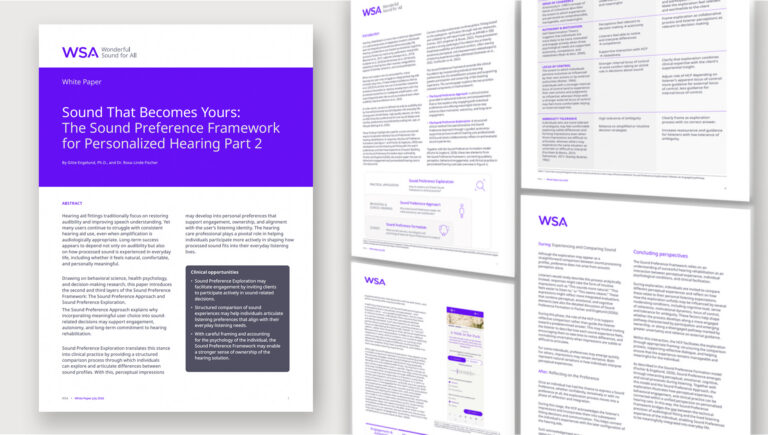
The Sound Preference framework for personalized hearing – part 2
Learn how empowering people to have a more active role in shaping their hearing experience can strengthen engagement, confidence, and long-term outcomes:
- The Sound Preference Approach: Supporting autonomy and engagement
- Sound Preference Exploration: A structured way to discover listening preferences
- Clinical implications: Integrating Sound Preference into everyday practice
Sound Preference supports
truly personalized care benefits
-

Stronger clinical
conversations90%
of HCPs report that the Sound Preference Approach supports their clinical conversations
-
Improved early
outcomes75%
of HCPs report better outcomes when discussing Sound Preference at the initial appointment.
-
Higher sales &
fewer returns60%
of HCPs reported an increase in sales and and fewer returns when using the Sound Preference Approach.



Get in touch
If you have any questions or comments regarding Sound Preference, our research, or other hearing care related topics, feel free to reach out.