
Sound Preference:
a new dimension in personalized hearing care
Research shows that up to 40% of people have a strong preference for one sound design over another. A preference that cannot be predicted by audiogram, lifestyle, or demographics. It must be experienced.
Reach out to your local representative to learn more about how Sound Preference can benefit your clinic.
Some people boost the bass until they really feel the music. Others want every note exactly as the artist intended. Some snap a photo and leave it untouched; others instantly reach for a filter to bring out color, warmth, or contrast.
We all tailor the world to match our personal preference. So why should hearing aids be any different?
People experience sound differently, and their preferences reflect that.
When it comes to hearing, one size doesn’t fit all
– and now we have the evidence
Sound preference reflects how individuals, independent of lifestyle or demographics, respond differently to the way sound is processed. Understanding and incorporating this into clinical practice can support stronger conversations, improved patient outcomes, and fewer returns. WSA puts sound preference first and makes real choice possible.
~40%
of listeners show a strong and consistent preference for one of two distinct sound processing designs
85%
of hearing care professionals agree that no single hearing aid technology is best for everyone
The Sound Preference Academic Advisory Board
Established in spring 2026, the Sound Preference Academic Advisory Board brings together leading researchers to guide the development of the Sound Preference approach. The board will identify research opportunities, guide future advances, and inspire broader engagement in Sound Preference within the academic community.
The Advisory Board will also award the first-ever Sound Preference Research Grant in collaboration with ORCA Labs. To ensure transparency and scientific credibility, the Board has defined the Call for Proposals for the first round of the grant and will independently review applications and select the winning project.
Read more about the Sound Preference Grant and the Academic Advisory Board on the ORCA Labs website.

Sound Preference must be experienced
Experience the difference for yourself with the WSA Sound Preference Tool. Explore both sound processing approaches across a range of everyday listening scenes and discover the one that matches your preference.
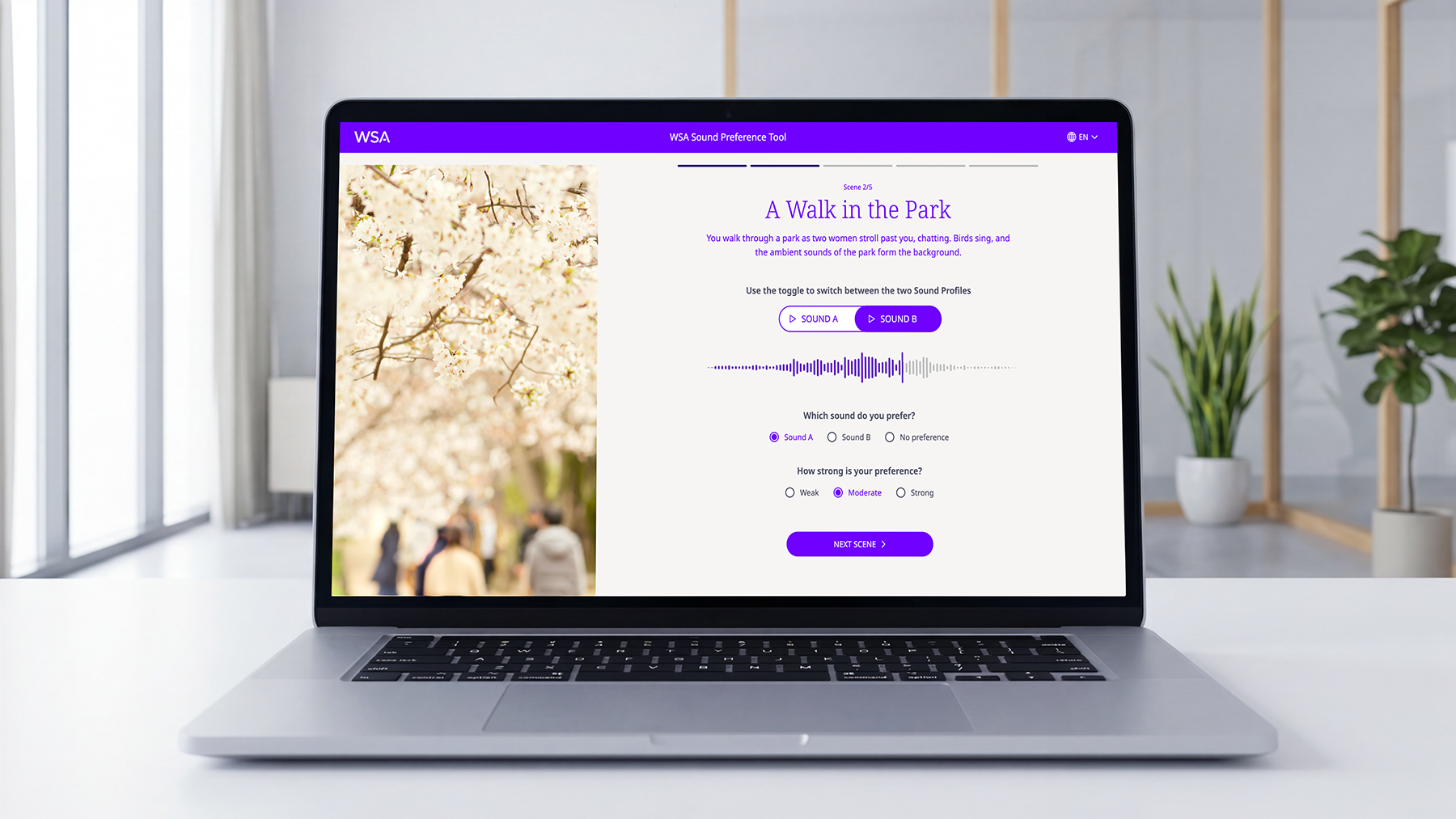
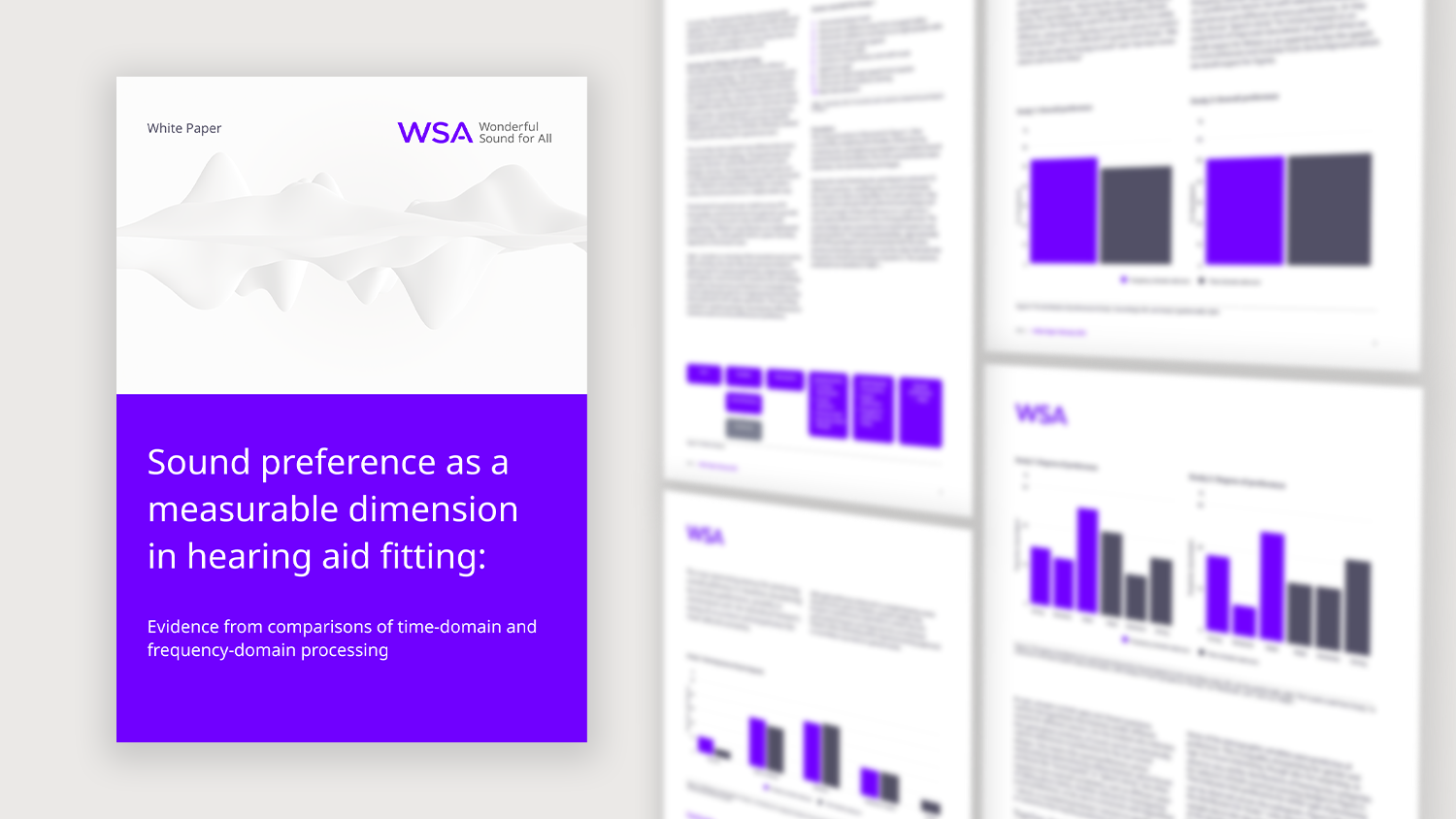
The science behind Sound Preference
Explore the evidence behind Sound Preference and understand how individual listening preferences shape hearing outcomes, including:
- Key findings from large-scale listener studies
- Evidence of distinct sound preferences across individuals
- Why preferences cannot be predicted by audiograms or demographics
- Implications for personalization and patient satisfaction
Two technologies.
Two distinct sound experiences.
Discover how different ways of processing sound can lead to fundamentally different listening experiences:
- The difference between time-domain and frequency-domain processing
- Why different listeners prefer different sound designs
- What this means for personalized hearing
Get in touch
If you have any questions or comments regarding Sound Preference, our research, or other hearing care related topics, feel free to reach out.